"AI agent" has become one of those phrases that means everything and therefore means nothing.
Executives drop it in board decks. Vendors slap it on product pages. Crypto projects use it to justify token launches with no underlying business. The result is a term so overloaded with meaning that most people nodding along in meetings have only a vague sense of what they're actually agreeing to.
That needs fixing. Because the actual definition — the real thing, not the marketing version — is genuinely important. And the gap between what most people think an AI agent is and what a properly architected AI agent actually does is where most of the real opportunity lives.
Start Here: What an AI Agent Is Not
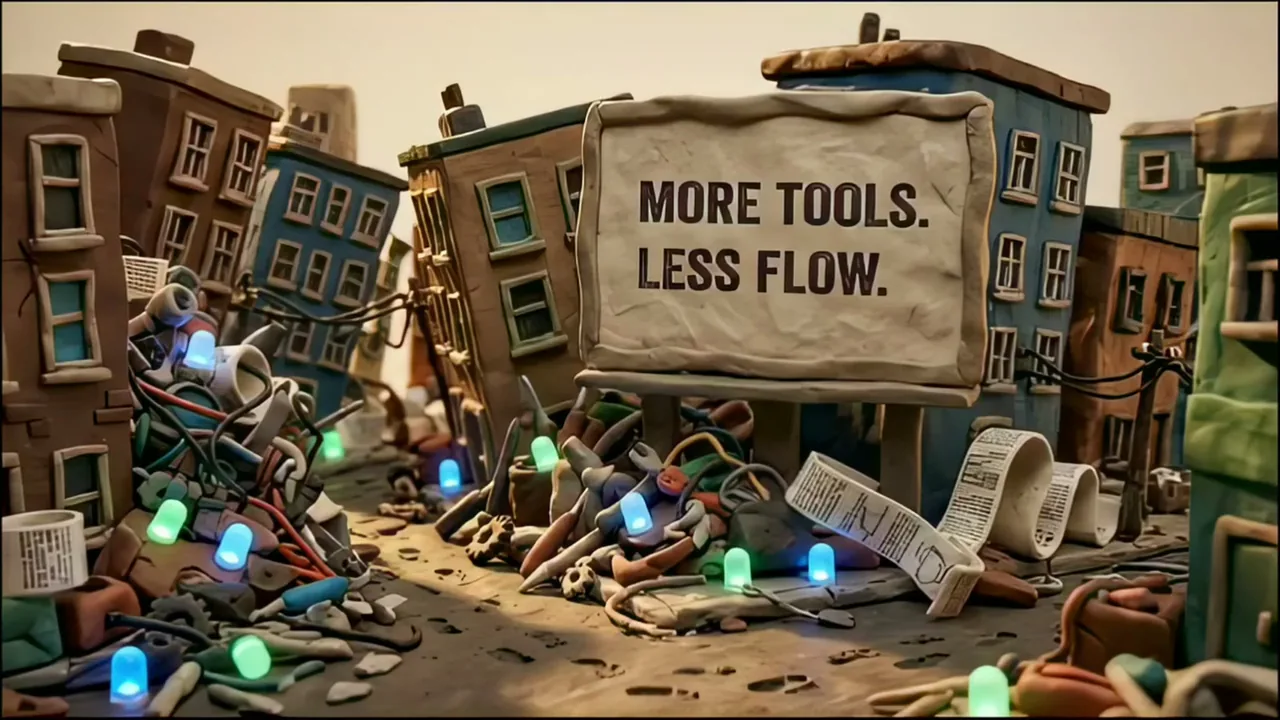
These are NOT AI agents
- ChatGPT — a language model with a conversation interface. You prompt, it responds. No persistent memory, no independent action.
- Smarter autocomplete tools that improve individual tasks at the margins
- Customer service widgets that answer FAQs when clicked
- Tools that generate a draft when you click a button
These are productivity tools. Useful ones. But a different category entirely.
The confusion matters because it leads businesses to think they've "done AI" when they've adopted tools that improve individual tasks at the margins. They haven't touched agent architecture. And agent architecture is where the structural transformation actually happens.
What an AI Agent Actually Is
An AI agent is:
- An autonomous system with a defined role and ongoing responsibilities
- Capable of taking action without a human initiating every step
- Operating continuously within its scope, making decisions within its parameters
- Escalating only when the situation requires human judgment
Think of it less like software and more like a member of staff — one with a job description, a set of tools they know how to use, access to the information relevant to their role, and the expectation that they'll show up and do the work whether or not their manager is watching.
The reason this matters operationally is the difference between a tool that helps you work faster and a system that works while you're asleep. The former improves your output. The latter expands your capacity without expanding your headcount.
The Three Categories of AI Capability
Most AI tools fall into one of three tiers:
- AI-Assisted — you do the work, AI helps at the edges. Autocomplete, grammar checks, suggestion boxes.
- AI-Augmented — AI does more of the work, you direct and review. Drafts, research, content generation.
- AI-Agent — AI does the work autonomously within defined parameters. You set direction and handle exceptions.
Most of what gets sold as "AI agents" today is actually tier one or two. True tier-three agents require significantly more architecture: memory systems, tool definitions, escalation logic, output quality controls. They're harder to build. But when they're built right, they're worth orders of magnitude more.
Why This Distinction Matters for Your Business
Here's the practical version:
If you're evaluating an "AI agent" vendor and they can't tell you which tier their product actually sits in — and most can't — you're probably looking at tier one or two with tier-three marketing.
Real agent architecture means:
- The agent has memory — it remembers what happened in previous interactions, not just the current session
- The agent has tools — it can take real actions: send emails, update CRM records, book calendar slots, query databases
- The agent has escalation rules — it knows when to hand off to a human and does it automatically
- The agent has output quality controls — someone reviews what it's doing and it's improving over time
The Productivity Gap
The difference between businesses that will thrive in this environment and those that won't isn't about adopting AI tools. It's about where on the capability spectrum they operate.
A business using AI-assisted tools is like a runner who got a slightly better pair of shoes. They're marginally faster. A business running proper AI-agent architecture is like a runner who got a bicycle. It's a different category of output.
The businesses that'll win over the next five years aren't the ones who adopted AI first. They're the ones who architected for it correctly — who built the memory systems, the tool integrations, the escalation logic, and the quality controls that turn a language model into an actual workforce.
The tools are commoditising fast. The architecture is the moat.
Want to understand what AI agents could do for your business?
Book a free 30-minute consultation. We'll map your current operations and identify where agent architecture would have the biggest impact.
Book a consultation →